




WASHINGTON, D.C. — It is rare when the auto finance industry applauds the Consumer Financial Protection Bureau for finalizing a rule, but that’s what happened today when the bureau finalized its small-dollar lending rule.
The bureau said its rule is aimed at stopping payday debt traps “by requiring lenders to determine upfront whether people can afford to repay their loans,” adding that the new protections cover loans that require “consumers to repay all or most of the debt at once.” The wording, according to the American Financial Services Association (AFSA), makes an important distinction between traditional installment lending and payday and title lending.
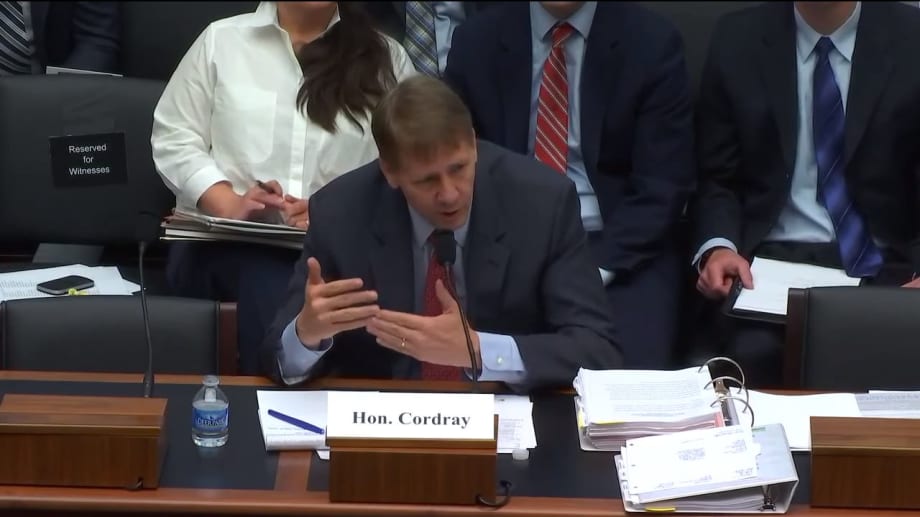
“Today’s rule is a validation of what we have been saying all along — that the small-dollar lending industry provides access to quality products, like traditional loans, and is critically important for the American consumer,” said AFSA President and CEO Chris Stinebert in a statement issued to F&I and Showroom. “When asked about the proposed rule during congressional testimony, [CFPB Director Richard Cordray] noted how essential it was that any rule focus on making sure there is room for responsible loans such as installment lending.”
Not covered by the rule are loans extended solely to finance the purchase of a vehicle or other consumer good in which the good secures the loan, as well as home mortgages, and other loans secured by real property or a dwelling. Also excluded are credit cards; student loans; non-recourse pawn loans; overdraft services and lines of credit; wage advance programs; no-cost advances; alternative loans like payday alternative loan programs administered by the National Credit Union Administration; and accommodation loans.
Covered by the rule are payday loans, auto title loans, deposit advance products, and longer-term loans with balloon payments — financial products the bureau said are heavily marketed to financially vulnerable consumers who often cannot afford to pay back the full balance when it is due. In most the cases, the bureau said, these borrowers must choose between defaulting, re-borrowing, or skipping other financial obligations like rent or basic living expenses like food and medical care.
The bureau noted that more than four out of five payday loans are re-borrowed within a month, usually right when the loan is due or shortly thereafter. It added that nearly one-in-four initial payday loans are re-borrowed nine times more, with the borrower paying more in fees than they receive in credit. With payday loans, the CFPB found that the vast majority of auto title loans are re-borrowed on their due date or shortly thereafter.
“The CFPB’s new rule puts a stop to the payday debt traps that have plagued communities across the country,” the CFPB Cordray stated in the bureau’s releasing announcing the finalized rule. “Too often, borrowers who need quick cash end up trapped in loans they can’t afford. The rule’s common sense ability-to-repay protection prevents lenders from succeeding by setting up borrowers to fail.”
And it’s that ability-to-pay standard that has always separated finance sources operating in the indirect auto finance channel and the payday lending industry.
Going forward, small-dollar lenders will be required to conduct a “full-payment test” to determine upfront that borrowers can afford to repay their loans without re-borrowing. For certain short-term loans of up to $500, lenders can skip the test if they offer a “principal payoff option” that allows borrowers to pay off the debt more gradually. Under this option, which not available on loans in which the lender takes an auto title on collateral, consumers may take out one loan that meets the restrictions and pay it off in full. For those needing more time to repay, lenders may offer up to two extensions, but only if the borrower pays off at least one-third of the original principal each time.
The rule also caps the number of loans that can be made in quick succession at three. It also prohibits lenders from making loans if the consumer has already had more than six short-term loans or been in debt on short-term loans for more than 90 days over a rolling 12-month period.
The rule also allows less risky loan options to forgo the full-payment test. This includes loans made by a lender who makes 2,500 or fewer covered short-term or balloon-payment loans per year and derives no more than 10% of its revenue from such loans. In addition, the rule does not cover loans that generally meet the parameters of “payday alternative loans” authorized by the National Credit Union Administration. These are typically low-cost loans which cannot have a balloon payment with strict limitations on the number of loans that can be made over six months.
The new rule also includes a “debit attempt cutoff” for any short-term loan, balloon-payment loan, or longer-term loan with an APR higher than 36% that includes authorization for the lender to access the borrower’s checking or prepaid account. After two straight unsuccessful attempts, the lender cannot debit the account again unless it gets a new authorization from the borrower. The lender must also give consumers written notice before making a debit attempt at an irregular interval or amount.
“These protections will give consumers a chance to dispute any unauthorized or erroneous debit attempts, and to arrange to cover unanticipated payments that are due,” the CFPB noted in its release. “This should mean fewer consumers being debited for payments they did not authorize or anticipate, or charged multiplying fees for returned payments and insufficient funds.”
The bureau received more than one million comments on its proposed rule during the open comment period, officials noting that several changes were made to the rule in response to comments received. These changes included adding the new provisions for the less risky options. The regulator also streamlined components of the full-payment test and refined the approach to the principal-payoff option.
The finalized rule will take effect 21 months after it is published in the Federal Register. The CFPB noted that it will conduct further study to consider how the market for longer-term loans is evolving and the best way to address concerns about existing and potential practices.